Labradoodle Puppies Coming Feb. 2
Ready for Home Mar 30
Labradoodle Puppies Coming Feb. 2 Ready for Home Mar 30
-
Yeti, our charcoal lab, is due February 2, 2026.
-
We are expecting Medium F1 Labradoodles, approximately 40 to 55 pounds.
-
No dog is truly hypoallergenic, but F1 Labradoodles are often a great choice for families with mild allergies. Royal carries two furnishing genes, which significantly reduces shedding and dander.
Our female lab was bred to a poodle possessing two furnishing genes. Each puppy will inherit one furnishing gene making our F1 Labradoodles low‑shedding and often suitable for families with mild allergies.
We’ve seen many children and adults with mild allergies do extremely well with F1 Labradoodles — including our own children’s friends, who inspired us to choose this pairing.
-
F1 Labradoodles typically have low‑to‑moderate shedding, especially when one parent (Royal) carries two furnishing genes. This means:
• Wavy coats
• Less shedding than a pure Labrador
• More allergy‑friendly than many first‑generation doodles
While no breeder can guarantee a completely non‑shedding coat in an F1, our pairing was intentionally chosen to produce wavy, low‑shedding coats ideal for families with mild allergies.
-
Yes — we invite families to visit around 6 weeks (in order of deposit received).
This visit helps you:
• Meet the puppies
• Observe their emerging personalities
• Ask questions
• Share your preferences
We raise our puppies in our home, so visits are structured, safe, and supervised.
-
Puppies are expected to go home the week of March 30th.
-
We prefer in-person pickup and currently do not offer delivery options. We are happy to discuss this further.
-
vet exam, vaccinations, deworming, CKC registration eligible, snuggly puppy, toys, blanket, food, and lifetime support.
-
We feed Yeti — and previously our beloved Labrador, Kinley — Orijen dog food, and we recommend it wholeheartedly for our puppies and adult dogs. We credit high‑quality nutrition as one of the biggest contributors to our dogs’ long, healthy, active lives and their consistently beautiful coats.
Your puppy will go home with a bag of Orijen Puppy to ensure a smooth transition. Orijen Puppy is rich in whole‑prey proteins, healthy fats, and nutrient‑dense ingredients that support brain development, bone growth, and immune health.
When your puppy becomes an adult, we highly recommend Orijen Six Fish. It’s packed with sustainably sourced fish, naturally occurring omega‑3s, and a higher moisture content than many dry foods — all of which support:
• A shiny, healthy coat
• Joint health
• Lean muscle development
• Digestive health
• Long‑term vitality
We’ve seen firsthand how Orijen contributes to strong bodies, glossy coats, and long, active lives. It’s been a foundational part of our dogs’ health for nearly two decades. We aren’t like other breeders who get kick backs from recommending a specific brand of dog food. This is our honest recommendation and what we see our dog (and our cat) LOVE.
-
Labradoodles — especially responsibly bred ones — reflect the significant investment breeders make long before puppies are born. For our F1 Labradoodles, costs include:
• Purchasing a high‑quality, fully health‑tested purebred Labrador (Yeti)
• Lifetime veterinary care, nutrition, and training
• Extensive OFA testing (hips, elbows, patellas, heart, eyes)
• Full DNA testing through Embark and Paw Print Genetics
• Stud fees for a fully health‑tested AKC/CKC registered Poodle (Royal)
• Prenatal care, whelping supplies, and veterinary support
• Raising puppies inside our home with daily socialization
• Time, sleep, and hands‑on care for eight weeks
When you purchase a puppy from us, you’re not just paying for the puppy — you’re supporting the years of care, testing, and responsible breeding practices that ensure your puppy is healthy, well‑adjusted, and ready for family life.
-
Some breeders emphasize multigenerational lines because they’ve invested in many generations of breeding toward a specific coat type. That’s one approach — but it’s not the only one, and it’s not inherently “better.”
Here’s the truth about F1 Labradoodles like ours:
• They benefit from hybrid vigor, often resulting in stronger health and fewer inherited issues.
• They tend to be athletic, intelligent, and family‑oriented, making them ideal companions for active PNW families.
• They have wavy, low‑shedding coats thanks to Royal’s furnishing genes.
• They are the closest representation of the original Labradoodle, which was created for service and allergy‑friendly companionship — not show‑ring aesthetics.
• Both parents are purebred, AKC and CKC registered, which means your puppy can be CKC registered as well.
Multigen breeders often focus on coat uniformity. We focus on health, temperament, and family‑friendly traits — the qualities that matter most to real families.
-
Currently, Labradoodles — including F1s — are not recognized by the AKC. There is ongoing debate within the doodle community about whether AKC recognition would help or harm the breed.
Some believe AKC recognition could shift focus toward appearance and conformation, potentially overshadowing the traits that make Labradoodles so beloved: intelligence, trainability, temperament, and companionship.
Here’s what matters for your puppy:
• Both Yeti and Royal are purebred, AKC and CKC registered.
• Your puppy will be eligible for CKC registration.
• F1 Labradoodles remain one of the most popular family dogs in the country — with or without AKC recognition.
Our focus is on raising healthy, loving, athletic companions — not show dogs.
-
We completely understand this question — running with our Labradors, Kinley and Yeti, has been one of the greatest joys of our lives. They’ve been our most loyal running partners, and we know your puppy will be the same.
But timing matters.
0–4 months
Your puppy is not ready for jogging. Their joints are still developing, and repetitive impact can cause long‑term damage. You can begin:
• Leash introduction
• Short training walks
• Recall practice
• Confidence‑building outings
4–12 months
You can begin structured leash walking, gradually increasing distance. Avoid:
• Running
• Jumping
• Long hikes
• Stairs
• High‑impact play
12–18 months
Most medium‑sized dogs can begin light jogging around 12–14 months, but full running should wait until 18 months, when growth plates are closed.
Your vet can confirm when your puppy is ready.
-
Absolutely — especially F1 Labradoodles. With a Labrador parent and a Poodle parent, they are naturally athletic, curious, and eager to explore. Once fully vaccinated and old enough for longer outings, they make excellent hiking companions.
-
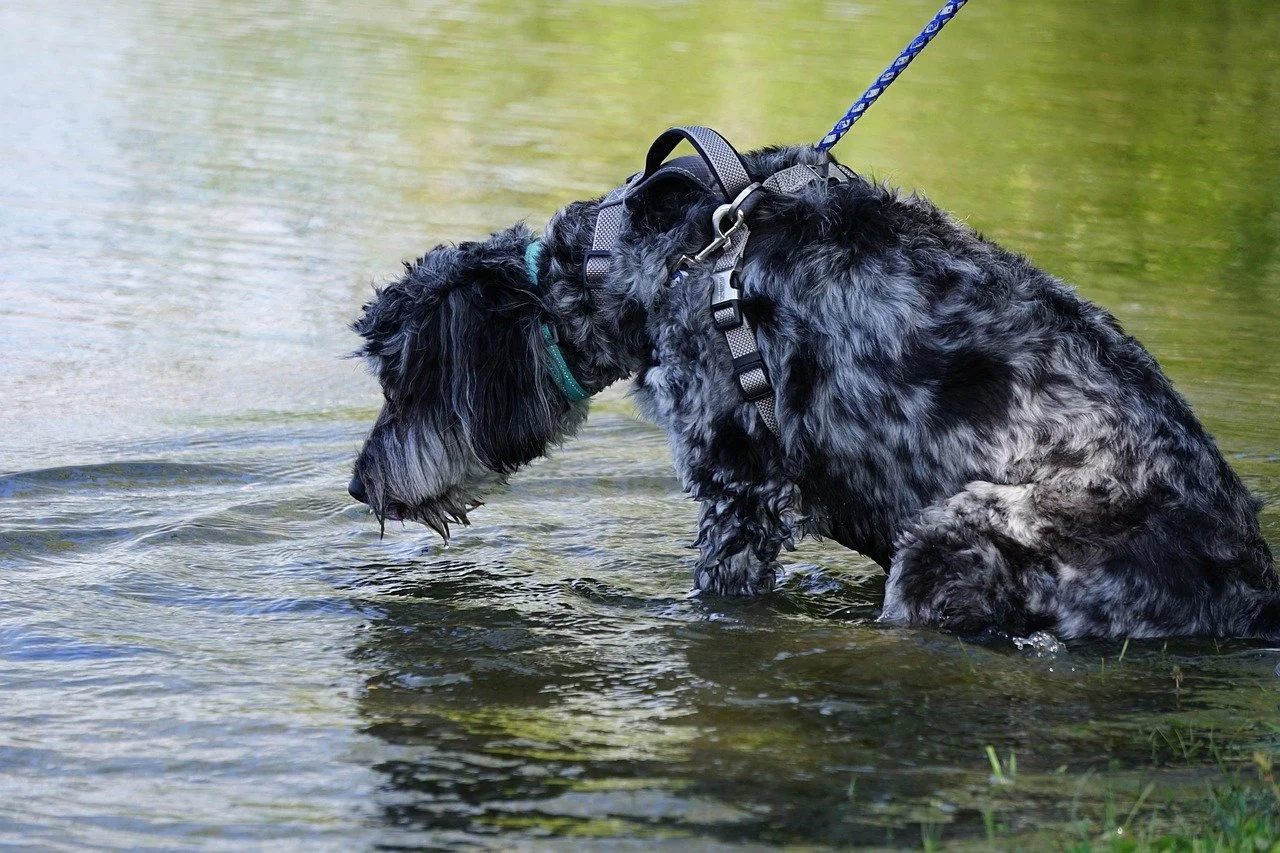
Labradoodles often love water, but every puppy is different. Here’s how to introduce swimming safely:
Swimming
• Start after your puppy is fully vaccinated (around 16 weeks). We’ll allow them to splash around if weather permits but they won’t be fully swimming.
• Choose calm, shallow water.
• Let them explore at their own pace.
• Never force them in — confidence grows naturally.
Some puppies (like Kinley) leap right in. Others (like Yeti) need gentle encouragement — but once they get it, they become avid swimmers.
Dock Jumping
• Wait until your puppy is at least 6–8 months old.
• Start with low docks or shoreline jumps.
• Use toys to motivate them — Labradoodles love retrieving.
• A confident dog jumping nearby can help spark their interest.
• Never push them in.
And yes — you can absolutely take them to Issaquah Salmon Days for dock‑jumping fun once they’re old enough. It’s one of our favorite local traditions.
-
Crate training is one of the best gifts you can give your dog. Tips:
• Make the crate cozy with a blanket and safe toy.
• Feed meals in the crate to build positive association.
• Start with short intervals and gradually increase time.
• Never use the crate as punishment.
• Keep nighttime potty breaks calm and quiet.
Consistency is key.
-
• Take your puppy outside every 1–2 hours.
• Always go to the same spot.
• Praise immediately after they finish. There’s many times you’ll find yourself saying, “Good Potty.”
• Watch for sniffing, circling, or whining — these are cues.
• Avoid punishment; accidents are part of learning.
Most puppies are reliable by 4–6 months with consistency.
-
We recommend focusing on one new command each week while reinforcing previous ones. Must‑have commands include:
• Sit
• Down / Lay Down
• Stay
• Come
• Leave it
Fun commands to build engagement:
• Shake
• Crawl
• Roll over
• Freeze & Bang bang (Yeti’s specialty!)
Training builds confidence and strengthens your bond.
-
One of our favorite suggestions is to create a local puppy playgroup. When your puppy grows up alongside other dogs in your area, you naturally build friendships with their owners. These relationships often turn into:
• Trusted pet‑sitting exchanges
• Built‑in playdates
• Supportive community
• Peace of mind when you travel
If you’d like to join our Eastside Labradoodles Dog‑Sitting “Co‑Op”, let us know — we love connecting families.
-
100% - Absolutely - Yes!!! F1 Labradoodles are known for being exceptionally family‑friendly. With a Labrador mother and a Poodle father, they inherit:
• The Labrador’s gentle, loyal, affectionate nature
• The Poodle’s intelligence and eagerness to please
• A balanced, social temperament ideal for homes with kids
Because our puppies are raised inside our home with three children, they are handled daily, exposed to normal household life, and naturally comfortable around kids of all ages.
-
Based on Yeti (60 lbs - now more because she’s expecting) and Royal (25 lbs), we expect this litter to mature into medium F1 Labradoodles, typically:
• 40–55 lbs
• Athletic, balanced build
• Ideal for active families
This size is perfect for hiking, running, swimming, and everyday family life.
-
Our puppies are raised inside our home on Lake Sammamish, surrounded by:
• Three children
• Household sounds
• Daily handling - cleaning paws every time they come inside, touching ears, opening their mouth and having them gently take a treat
• Early neurological stimulation
• Gentle exposure to water sounds
• Age‑appropriate outdoor play
• Visitors and supervised interactions
This creates confident, well‑adjusted puppies who transition easily into new homes
-
Every Eastside Labradors & Labradoodles puppy goes home with:
• CKC registration
• First vaccinations
• Deworming
• Full veterinary exam
• Toys with litter scent
• Blanket with mom’s scent
• Starter bag of Orijen Puppy
• One‑Year Genetic Health Guarantee
• Lifetime support
We want your puppy’s transition home to be smooth, supported, and joyful.
-
We consider ourselves dog people (and yes, we also have a cat!). Once you bring home a puppy from us, you become part of our extended family. We’re here for:
• Training questions
• Nutrition guidance
• Health questions
• Behavior support
• Transition challenges
• Long‑term advice
We’ve raised Labradors for nearly 20 years — and we love supporting our families.
-
We recommend bringing:
• A secure crate for the car
• Puppy wipes and some poop bags
• A water bottle and small bowl
• A calm, patient mindset — it’s a big day for your puppy
We’ll send you home with a blanket, toys, a starter collar and leash, puppy food that will get you started.
-
Your puppy will be adjusting to:
• A new environment
• New people
• A new routine
Expect lots of naps, short bursts of play, and a little whining at night It can sometimes feel more similar to bringing home a newborn baby. Expect frequent potty trips outside and sometimes some gentle rocking. When we took Yeti home, we discovered country music helped. She came from a litter of 12 and needed more snuggles and noise to make her feel at home. Consistency, patience, and gentle structure will help your puppy settle quickly. AND don’t forget a crate!